


Wagering Requirements Explained
A wagering requirement is the amount you have to bet before bonus money turns into cash you can withdraw. The multiplier on the banner, 35x, 40x, 50x, tells you very little on its own. What actually decides whether a bonus is worth taking is what that multiplier is applied to, how much the games you play cost you on average while you clear it, and a handful of rules in the small print that can void your winnings in one careless bet.
This guide walks through all of it with real numbers, including the UK’s 10x cap that came into force in January 2026 and changed what “a good bonus” means.
What is a wagering requirement?
A wagering requirement (also called playthrough or rollover) is the total value of bets you must place before bonus funds, or winnings made with them, can be withdrawn. If you receive a €50 bonus with 40x wagering, you must place €2,000 worth of bets before the bonus balance converts to real money.
It does not mean you have to lose €2,000. Your bets recycle: win €10, bet it again, and that €10 counts towards the total again. You need €2,000 in total stakes, not €2,000 of your own money.
Casinos use wagering for a simple reason. Without it, anyone could deposit €100, collect €100 in bonus money and withdraw €200 straight away. The requirement forces the bonus to be played, which gives the house edge time to work.
How to calculate a wagering requirement
The formula is simple. The trap is the calculation base.
Required wagering = (amount the multiplier applies to) × (multiplier)
There are two common bases, and they produce very different numbers for what looks like the same offer.
Example: 100% bonus up to €100, 35x wagering, you deposit €100.
- 35x on the bonus only: €100 × 35 = €3,500 to wager.
- 35x on deposit + bonus: (€100 + €100) × 35 = €7,000 to wager.
Same headline, double the work. The terms will say which applies, usually in a line like “wagering requirement of 35x (deposit + bonus).” If a casino advertises a low multiplier but applies it to deposit plus bonus, it can be tougher than a higher multiplier on the bonus alone. A 25x (deposit + bonus) offer, for example, requires €5,000 on the deposit above, more than a 40x bonus-only offer at €4,000.
A real-world illustration from our own reviews: at the time we tested KinBet, its welcome package carried 35x on deposit plus bonus, a separate 40x on free-spin winnings, a €5 maximum bet and a 10-day window. None of those four numbers appeared in the headline offer.
The number most guides leave out: expected loss while wagering
Every bet you place carries a built-in cost, the house edge. On a slot with 96% RTP, the average cost is 4% of every euro you stake. Over a large volume of bets, that average is what you can expect to lose.
So the real question for any bonus is: will the expected loss from wagering be smaller than the bonus itself?
Expected loss = required wagering × house edge
[IMAGE: wagering-expected-loss-chart.svg | Alt text: “Bar chart comparing required wagering and expected loss for a €100 bonus at 10x, 35x bonus-only and 35x deposit plus bonus, on a 96% RTP slot”]
| Offer on a €100 deposit (€100 bonus) | Required wagering | Expected loss at 96% RTP | Expected value of the bonus |
|---|---|---|---|
| 10x bonus only (UK maximum since 2026) | €1,000 | €40 | +€60 |
| 25x bonus only | €2,500 | €100 | €0 |
| 35x bonus only | €3,500 | €140 | −€40 |
| 35x deposit + bonus | €7,000 | €280 | −€180 |
| 50x bonus only | €5,000 | €200 | −€100 |
Two honest caveats. These are averages; any single session can finish far above or below them, which is exactly why people still win big on bonuses. And the RTP matters enormously: the same 35x bonus-only offer costs €175 on average on a 95% RTP slot, and €105 on a 97% one.
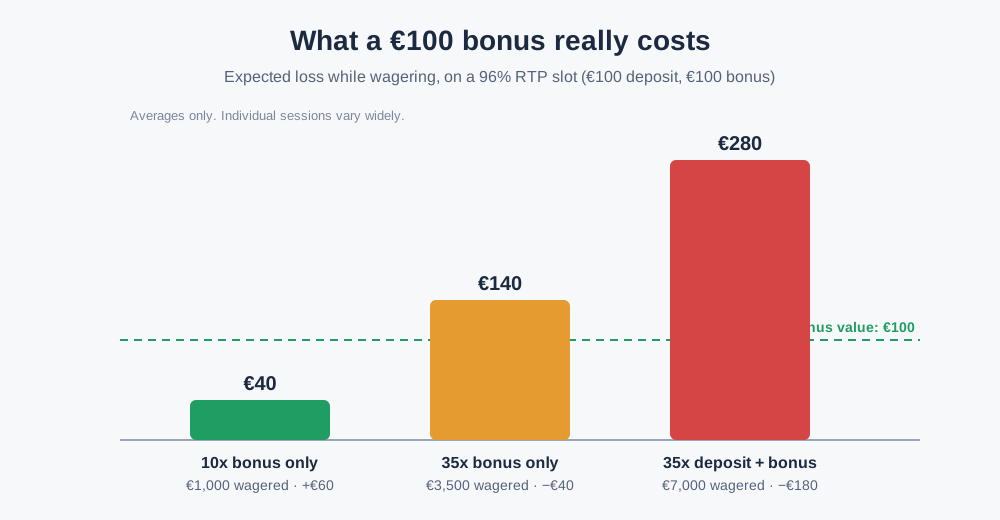
The takeaway is not “never take a bonus.” It is that above roughly 25x, a standard match bonus stops being free money on average and becomes extra playtime you are paying for with expected losses. If extra playtime is what you want, that can be a perfectly fine trade. Just make it knowingly. Our best payout slots guide lists high-RTP games, and our wagering slots page covers titles that suit clearing a bonus.
Game contribution: why your blackjack bets may barely count
Not every bet counts in full towards wagering. Casinos weight games by how cheaply you could otherwise clear the bonus on them. Typical weightings look like this:
| Game type | Typical contribution | Why |
|---|---|---|
| Most video slots | 100% | Higher house edge, the default bonus game |
| High-RTP slots (often 97%+) | Often 0% or excluded | Too cheap to clear bonuses on |
| Jackpot slots | Often 0% or excluded | Large prize pools the casino doesn’t want funded by bonuses |
| Bonus-buy features | Usually prohibited during wagering | Concentrate risk; see our bonus buy slots guide |
| Live game shows | Often 50% or less | Mixed house edge |
| Roulette | Often 10-20% | Low house edge on even-money bets |
| Blackjack and video poker | Often 5-10% or excluded | Very low house edge with good strategy |
| Crash games | Varies, frequently excluded | Check each casino’s list |
A 10% weighting means a €10 hand of blackjack moves you only €1 towards the target. Clearing €3,500 that way would take €35,000 in stakes. If you prefer table games or live dealer games, a wagering bonus is usually the wrong offer for you.
-
The small-print rules that void winnings
The multiplier gets the attention, but these are the terms that most often cost players money after they think they’ve won.
Maximum bet while wagering
Almost every bonus caps your stake, typically at €5 per spin or hand, sometimes lower. Break it once and the casino can confiscate the bonus and everything won with it, even if the oversized bet lost. Some casinos let the game accept the bet anyway, so the software won’t stop you.
Time limits
Wagering usually has to be finished within 7 to 30 days. Miss the deadline and the bonus and its winnings expire. A €7,000 requirement in 10 days means around €700 of stakes every day, which is a lot of play for most people.
Sticky vs non-sticky bonuses
This single distinction changes the value of a bonus more than most players realise.
- Non-sticky (also called “parachute”): you play with your own deposit first. The bonus only activates once your real money is gone. If you win big with your own money first, you can withdraw and simply forfeit the bonus. This is strongly in your favour.
- Sticky: deposit and bonus are mixed from the start, and the bonus amount itself can never be withdrawn. It is removed from your balance when you cash out.
If two offers are otherwise equal, the non-sticky one is worth considerably more.
Maximum cashout
Many bonuses, especially no-deposit bonuses and free spins, cap what you can withdraw from them, often at €50 to €200, or as a multiple of the bonus such as 5x or 10x. Hit a €2,000 win on a €10 no-deposit bonus with a €100 cap and €1,900 of it disappears. Offers promoted as free spins without ID verification carry the same wagering and cashout caps as any other free spins, and the checks still happen before you withdraw.
Separate requirements on free spins
Free-spin winnings frequently have their own, often higher, multiplier. A package might say 35x on the deposit bonus and 40x on free-spin winnings. Treat them as two separate requirements.
Order of funds and bonus stacking
Check whether you can hold more than one bonus at once, and in which order real money and bonus money are used. Taking a reload bonus while the welcome bonus is still active can lock your whole balance under the stricter set of terms.
Prohibited play patterns
Casinos ban strategies designed to clear bonuses at almost no risk, such as betting on both red and black in roulette or switching to low-risk bets after a win. Using them is treated as bonus abuse and is the most common reason given for confiscating winnings. If you believe a casino has confiscated winnings unfairly, our guide on whether you can sue a casino for not paying out explains the realistic routes.
Wagering rules by market: the law now matters
Wagering used to be purely the casino’s choice. In several regulated markets, it no longer is.
| Market | Rule on wagering | What it means for you |
|---|---|---|
| United Kingdom | Capped at 10x the bonus since 19 January 2026; mixed-product promotions banned | Bonuses are smaller, but far more of them are positive value on average |
| Sweden | Licensed casinos may only offer a bonus on your first gaming occasion | One welcome offer per casino; ongoing promotions without cash bonuses |
| Denmark | A comparable wagering cap has applied since 2020 | Similar effect to the UK rules |
| MGA-licensed sites (other markets) | No legal cap; terms set by the casino | Typically 25x to 40x; read the base carefully |
| Curaçao, Anjouan and similar offshore licences | No cap | 35x to 50x is common, sometimes on deposit plus bonus, plus strict cashout caps |
The UK change is significant. Before it, a £20 bonus at 40x meant £800 of betting. Under the cap, the maximum is £200. The Gambling Commission’s consultation also noted the obvious workaround: casinos can still use game weighting to slow wagering down, so reading the contribution table remains essential even on a 10x offer.
For more on how licences differ in player protection, see our guides to MGA casinos and Curaçao casinos. Readers in Sweden can compare current offers on our best casino bonuses in Sweden page.
Types of bonus compared
| Bonus type | Typical wagering | Can you withdraw the bonus itself? | Best for |
|---|---|---|---|
| Match deposit bonus (non-sticky) | 25x-40x, bonus or deposit + bonus | Yes, once wagering is complete | Slot players who want the option to walk away early |
| Match deposit bonus (sticky) | 30x-50x | No, the bonus is removed at cashout | Players who only want extra playtime |
| Free spins | Often separate, 30x-40x on winnings | Winnings only, often capped | Trying a new slot |
| No-deposit bonus | 40x-60x plus low cashout cap | Winnings up to the cap | A risk-free look at a casino |
| Wager-free bonus or free spins | None | Yes, straight to cash | Everyone; usually smaller amounts |
| Cashback | None when paid as cash | Yes | Regular players who want predictable value |
If you’re tired of multipliers altogether, look at no-wagering casino bonuses or cashback offers paid in real money. They are usually smaller than match bonuses, but every euro of them is actually yours. Our overview of casino bonuses covers the other formats, including less common mechanics such as the Bonus Crab.
Pros
- More playtime from the same deposit, which is the main genuine benefit.
- A real chance at an early big win, especially with non-sticky bonuses where your own money plays first.
- Positive expected value is possible at low multipliers, such as the UK's 10x maximum.
- Lets you try a new casino with less of your own money at risk.
Cons
- Negative expected value on most offers above about 25x.
- Your money is locked until wagering is complete, including your deposit at many casinos.
- Easy to break a rule accidentally, such as the max bet or a restricted game, and lose everything won.
- Pushes you to play more than you planned, just to meet a deadline.
- Table-game and live-casino players get little value because of low contribution rates.
Who should take a wagering bonus, and who should skip it
Consider it if you:
- mainly play slots and enjoy longer sessions;
- can meet the requirement comfortably within the time limit at stakes you’d use anyway;
- find a low multiplier (10x to 25x on the bonus only) or a non-sticky structure.
Skip it if you:
- want to withdraw quickly and flexibly;
- mainly play blackjack, roulette or live tables;
- tend to chase a target once you’ve started;
- are playing with a strict budget. Our bankroll management guide explains why a bonus should never change the amount you planned to spend.
Declining a bonus is always allowed. At most casinos it’s a tick box at deposit or a quick message to support before you play.
A five-point check before you claim any bonus
- Find the calculation base. Bonus only, or deposit plus bonus?
- Work out required wagering and expected loss. Multiply by the house edge of the games you’ll actually play.
- Read the max bet and time limit and decide whether they fit how you play.
- Check sticky vs non-sticky and any cashout cap.
- Look at the game contribution list for the games you enjoy.
If anything in the terms is unclear, ask support in writing before you deposit and keep the reply. For deeper tactics once you’ve committed to a bonus, see our companion guide on how to beat wagering requirements, and for any term you don’t recognise, our casino glossary.
Summary
A wagering requirement is the price of a bonus, and the multiplier alone never tells you the price. Check what it is applied to, multiply by the house edge to see your expected cost, and read the max-bet, time-limit, sticky and cashout rules before you deposit. Under the UK’s 10x cap many bonuses are now genuinely worth taking; at 35x on deposit plus bonus, most are not, whatever the headline says.
If a simple, no-strings offer suits you better, wager-free bonuses and real-cash cashback are increasingly common, particularly at casinos where you play without a traditional account and Pay N Play casinos. And whatever you choose, treat a bonus as entertainment value, never as a way to recover losses. If that line starts to blur, our stop gambling page lists where to find help.
More Casino Information



FAQ: Wagering requirements
It means you must bet 35 times a set amount before bonus funds become withdrawable. On a €100 bonus with 35x on the bonus only, that’s €3,500 in total bets. If the 35x applies to deposit plus bonus, it’s €7,000.
Sometimes. Some casinos apply the multiplier to the bonus only; others to deposit plus bonus, which doubles the requirement on a 100% match. Many also lock your deposit until wagering is complete. The bonus terms state which rules apply.
Yes, 10x on the bonus is low. On a 96% RTP slot, a €100 bonus at 10x costs about €40 in expected losses, leaving positive average value. It has been the legal maximum at UK-licensed casinos since 19 January 2026.
You can usually withdraw, but doing so forfeits the bonus and any winnings made with it. At non-sticky bonuses, if you’re still playing with your own deposit, you can often withdraw your real-money winnings and simply cancel the bonus.
Often, yes. Winnings from free spins are commonly paid as bonus money with their own requirement, sometimes higher than the deposit bonus. Wager-free free spins pay winnings straight to your cash balance.
Slots, because they usually count 100%. Within slots, higher RTP means lower expected cost, but check that the game isn’t excluded. Table games and live casino typically count 10% to 20% or not at all.
The casino can cancel the bonus and confiscate winnings made with it, even if that particular bet lost. Keep every stake below the stated limit until wagering is complete.
With a non-sticky bonus your own money is used first and you can withdraw it freely if you win before touching the bonus. With a sticky bonus the bonus amount is never withdrawable and is deducted when you cash out.
Cashback paid as real money usually has none. Some casinos pay cashback as bonus funds with a small requirement, often 1x to 5x, so check how it is credited.
Yes. Wager-free bonuses pay winnings as cash straight away. They’re typically smaller than match bonuses but carry no playthrough, which often makes them better value.
Because the lower the house edge, the cheaper it is for players to clear a bonus. Excluding the highest-RTP games protects the casino’s margin on the promotion.
Normally no, once the requirement is met the funds become real money. Winnings can still be withheld if the casino finds a breach of the bonus terms during its withdrawal review, which is why reading the rules before you play matters.